

By Jordan Macnab · Macnabs Real Estate Team · Tri-Cities
If you own a home in Coquitlam, there’s a good chance your lot qualifies for more housing than you think. The Province of BC passed new legislation in late 2023 that required municipalities — including Coquitlam — to allow small-scale multi-unit housing in most low-density neighbourhoods. Coquitlam is now proposing major amendments to its Zoning Bylaw to comply, and for homeowners, that opens up some real options.
Laneway homes, garden cottages, carriage houses, secondary suites, duplexes — these are all now on the table for many standard Coquitlam lots. But the details matter. Here’s what you need to know before you start making plans.
What is “Small-Scale Multi-Unit Housing”?
Coquitlam is grouping all of these housing types under one umbrella term in its updated Zoning Bylaw: Small-Scale Residential. The housing types that fall under this include:
- Single-detached houses
- Secondary suites (inside the main home)
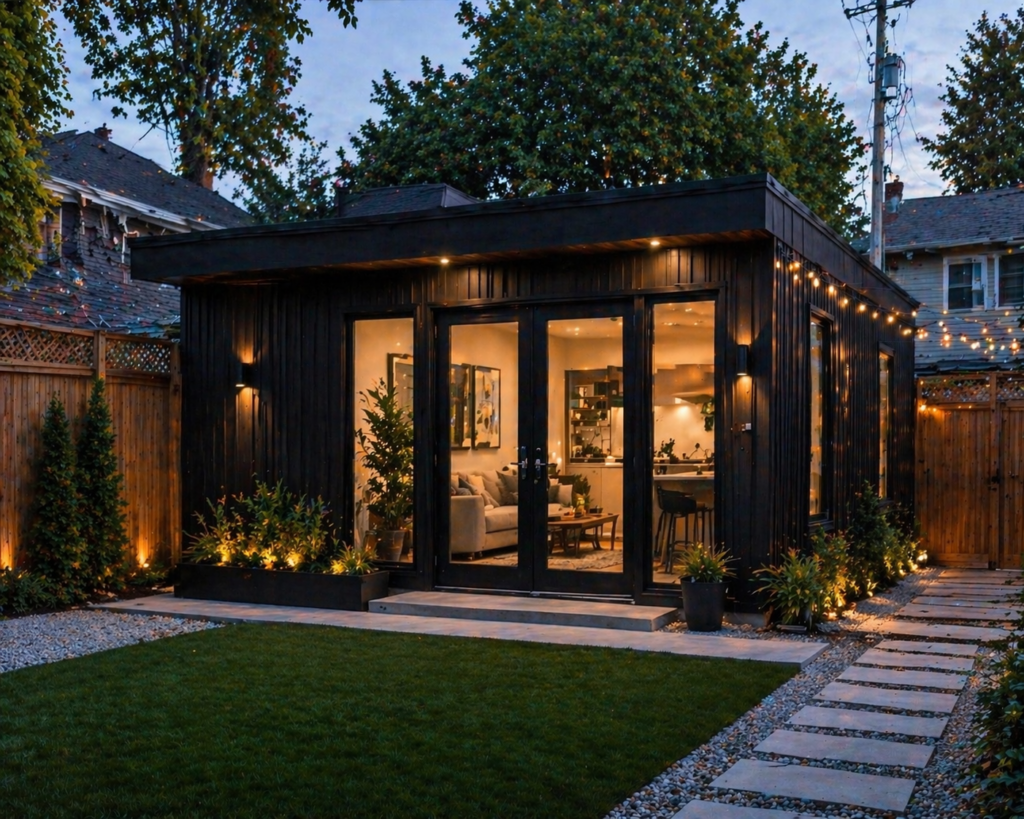
- Backyard suites — also called garden cottages, carriage houses, or laneway homes
- Duplexes, triplexes, fourplexes, and multiplexes
So when people ask me about building a laneway home in Coquitlam, they’re really asking about one piece of a much bigger picture. Your lot may qualify for a combination — for example, your existing home plus a secondary suite inside it plus a detached garden cottage out back. That’s three units on a standard residential lot, and it’s now permitted in many parts of the city.
How many units can you build on your Coquitlam lot?
This comes straight from the City’s proposed zoning framework, based on your lot size:
- Lots 280 m² (3,014 sq ft) or smaller — up to 3 units
- Lots larger than 280 m² and under 4,050 m² (1 acre) — up to 4 units
- Lots 4,050 m² (1 acre) and larger — up to 1 principal unit and 1 accessory unit
Most standard Coquitlam residential lots fall in that middle bracket — larger than 280 m² but well under an acre — which means 4 units are on the table. That could be your main home, a suite inside it, a garden cottage or laneway home, and potentially one more unit depending on configuration.
Two important exceptions to be aware of: the new rules generally don’t apply to lots within Transit-Oriented Areas (those have their own separate zoning process), and they don’t apply to lots not connected to the municipal water or sewer system.
The proposed Coquitlam zoning zones explained
Coquitlam is introducing three new Small-Scale Residential zones to replace the old single-family zones. Here’s how they break down:
R-1 Small-Scale Residential — This is where most existing RS-1, RS-3, RS-6, RS-9, RS-10, RS-11, and RT-1 zoned properties will land. If you’re in a standard single-family neighbourhood in Coquitlam, this is likely your new zone. It allows 3 to 4 units, up to 45–50% lot coverage, a maximum height of 3 storeys or 11 metres, and a floor area ratio (FAR) of 0.65 to 0.75.
R-2 Compact Small-Scale Residential — Applies to existing RS-4, RS-5, RS-7, and RS-8 zoned properties. Compact lots with a minimum width of 12.5 metres. FAR of 0.65 to 0.75, same height and coverage limits as R-1.
R-3 Transitional Small-Scale Residential — A lower-density option with a maximum FAR of 0.5 and only one building permitted per lot. Applies to certain properties where the City prefers a more gradual transition to higher density.
What are the key development rules?
Across the new R-1 and R-2 zones, here are the numbers you need to know:
- Maximum lot coverage: 45% to 50% — this includes all structures combined, so your existing house counts toward this
- Maximum height: 3 storeys or 11 metres
- Parking: 1 space per unit under 850 sq ft · 1.5 spaces per unit between 850–1,700 sq ft · 2 spaces per unit over 1,700 sq ft
- Minimum lot size for subdivision: R-1 requires 650 m² and 18.5 m width · R-2 requires 465 m² and 12.5 m width
Parking is one that catches people off guard. If you’re adding a laneway home and it’s under 850 sq ft, you need 1 dedicated parking space for it — separate from your main home’s parking. On lots with tight driveways or limited space, this is worth thinking through early.
What will it cost to develop?
Beyond construction costs, Coquitlam requires developers — including individual homeowners adding a unit — to contribute to community infrastructure through:
- Development Cost Charges (DCCs) — set fees that go toward roads, water, sewer, drainage, and parks
- Amenity Cost Charges (ACCs) — a proposed new program to fund parks, recreation, and community amenities
- Frontage improvements — depending on your property and current infrastructure, the City may require you to upgrade the sidewalk, curb, or services along your property line
These costs vary significantly depending on where your property is located and what’s already in front of it. This is exactly the kind of thing that’s worth assessing before you get too far into planning — because it can shift your budget meaningfully. I’ve seen frontage improvement requirements add tens of thousands of dollars to a project that looked straightforward on paper.
What zone is my Coquitlam property moving to?
Here’s the short version of the zone transition the City is proposing:
- RS-1, RS-3, RS-6, RS-9, RS-10, RS-11, RT-1 → R-1 Small-Scale Residential
- RS-4, RS-5, RS-7, RS-8 → R-2 Compact Small-Scale Residential
- Certain higher-density preferred areas → R-3 Transitional Small-Scale Residential
- RS-2 Suburban Residential → renamed RS-2 Rural Residential (no change to what’s allowed)
- RT-3 Multiplex Residential → renamed R-4 Intensive Small-Scale Residential
Not sure which zone you’re currently in? You can check the City of Coquitlam’s zoning map at LetsTalkCoquitlam.ca/SmallScale, or reach out and I’ll look it up for you.
My take as someone who has built in the Tri-Cities for decades
These zoning changes are genuinely significant for Coquitlam homeowners. The old rules made adding a backyard suite or laneway home a slow, uncertain process. The new framework removes a lot of that friction — if your lot qualifies, you’re building by right, not waiting on a rezoning application.
That said, “permitted” and “straightforward” aren’t always the same thing. Lot coverage, parking, servicing, frontage requirements, and the specific configuration of your existing structures all affect what’s actually buildable on your property. I’ve walked hundreds of properties across the Tri-Cities over the years and there’s no substitute for looking at the actual lot before drawing any plans.
If you’re thinking about adding a laneway home or garden cottage in Coquitlam — whether to generate rental income, house family, or add value before a sale — the smartest first step is a realistic assessment of your specific property.
Curious what’s possible on your lot? Let’s talk.
I offer a free, no-obligation lot assessment for Coquitlam homeowners. With my background in construction and real estate, I can give you a straight answer on what’s buildable, what it’s likely to cost, and whether it makes financial sense for your situation.
📞 Call or text Jordan Macnab — Macnabs Real Estate Team
604-551-5695 – jordan@themacnabs.com

About Jordan Macnab: Jordan grew up in a construction family — his dad was a builder and project manager — and has been learning how homes go together since before he could drive. He worked for major BC builders including Polygon and Progressive, earned his Construction Safety Officer certification, and won HGTV’s Canada’s Handyman Superstar Challenge. That led him to found VARIX Construction, a Tri-Cities renovation company he ran for over 10 years. In 2008 he added his Real Estate license, bringing the build and the buy together under one roof with the Macnabs Real Estate Team.
Source: City of Coquitlam Small-Scale Multi-Unit Housing Background Handout, 2025. Proposed zoning changes are subject to Council approval and may change. Always verify current bylaws with the City of Coquitlam before making development decisions.